A Quiet Anthem: A Review of The Perks of Being a Wallflower
★★★★⯪
Directed By:
Starring:
Production Companies:
Distributed By:
Release Date:
Running Time:
Stephen Chbosky
Logan Lerman
Emma Watson
Ezra Miller
Mae Whitman
Kate Walsh
Dylan McDermott
Joan Cusack
Paul Rudd
Mr. Mudd Productions
Summitt Entertainment
September 21, 2012
103 minutes
Some movies entertain. Some distract. And then there are a few that don’t just move you—they see you. The Perks of Being a Wallflower, the 2012 film adaptation of Stephen Chbosky’s beloved novel, belongs firmly in the third category. IT doesn’t arrive with a grand entrance or flashy gimmicks. It simply finds a crack in your soul, quietly slips in, and refuses to leave.
I’ve watched the movie many times and cry every time—not always for the same reasons, but always with the same intensity. I cry for Charlie. I cry for the version of myself I see in him. And I cry because this film captures, with rare honesty, what it means to be young, emotionally overwhelmed, and trying to find a place in the world that often feels indifferent to quiet people..
This isn’t just a review from a critic. It’s a review from a fellow wallflower.
Before diving fully into the film, I should mention that I’ve also written a review of the novel of the same title, which can be found here. That piece explores the emotional depth and epistolary style of the book, while this one focuses on how that same soul translates to the screen. If you’ve read the book—or are curious about how the two versions compare—you might find the companion review a meaningful follow-up.
“You see things. You keep quiet about them. And you understand.”
Charlie, portrayed with heartwarming tenderness by Logan Lerman, isn’t your typical protagonist. He isn’t loud or witty or effortlessly charming. He’s shy, emotionally complex, and deeply affected by his past. From the first few minutes, we sense the weight he carries—something heavy, unnamed, and haunting. The way he walks the hallways with eyes downcast, the way he writes letters to an anonymous friend instead of speaking his truth aloud—it’s all achingly familiar to anyone who has ever felt invisible.
Lerman’s performance is a revelation. He doesn’t oversell Charlie’s pain or retreat into a cliche. He lets it simmer just below the surface—in a lingering glance, a nervous twitch, a hollow smile. There’s a quiet moment when Charlie says, “I don’t want to be alone,” and it isn’t loud or dramatic, but it broke me. Because I’ve said that too. Maybe not out loud. Maybe in my head. But I’ve said it.
What makes The Perks of Being a Wallflower so emotionally resonant is its refusal to sensationalize adolescence. It doesn’t rely on melodrama. Instead, it immerses us in the raw, trembling experiences of growing up: the confusion, the longing, the tiny triumphs that feel enormous, and the silences that say more than words ever could.
Found Family: A Light in the Darkness
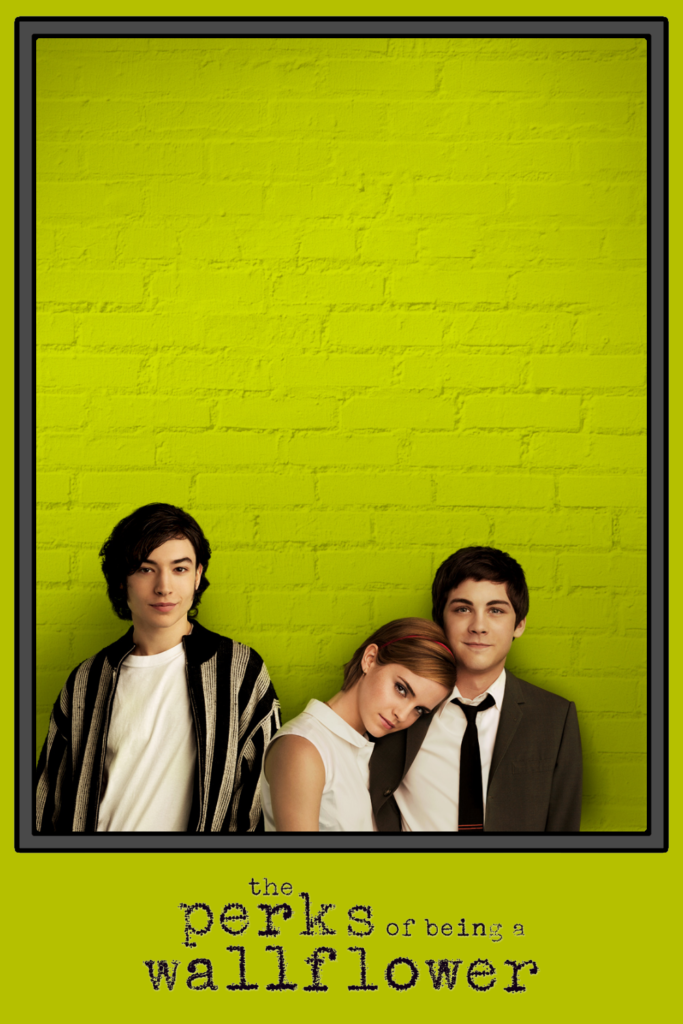
The heart of the film lies not just in Charlie’s pain, but in his relationships—particularly with Sam and Patrick, two seniors who welcome him into their lives without asking him to change. Their friendship is his lifeline. It’s his salvation.
Ezra Miller’s Patrick is magnetic—witty, flamboyant, sharp—but beneath his charisma lies a reservoir of vulnerability. Miller brings nuance and depth to a role that could’ve easily fallen into a caricature. He’s the kind of person who hides his pain behind jokes, who lights up a room while quietly wondering if he truly belongs in it. Something that I can relate to more often than I’d like to admit.
Emma Watson’s Sam is just as layered. She radiates warmth and empathy, but there’s a fragility beneath the surface. She isn’t a manic pixie dream girl. She’s a survivor, someone who’s been hurt and is still learning to love herself. And when she sees Charlie—not just notices him, but sees him—it’s as if the universe cracks open a little.
Watching these friendships unfold felt like watching my own adolescent dreams come to life. The tunnel scene with David Bowie’s “Heroes,” the shared secrets at late-night parties, the joys of simply belonging—all of it felt real. imperfect, yes, but real. these aren’t the polished, idealized friendships of most teen dramas. They’re messy and human and filled with love that doesn’t always know how to express itself.
As a wallflower, these moments were everything. They reminded me that even if you’re quiet, even if you’re broken, you still deserve connection. You still deserve to be known.
Mental Health Without the Filter
One of the MOST powerful aspects of The Perks of Being a Wallflower is its honest, unflinching portrayal of mental health. Charlie’s struggles with trauma, depression, and anxiety are never used as plot devices. They’re treated as lived realities. The film doesn’t hand us a neat diagnosis or dramatic breakdown. Instead, it shows how mental illness can live in the quiet moments: the zoning out, the sudden tears, the panicked silences.
As someone who’s wrestled with my mental health—invisible battles, quiet panic, the fear of unraveling—I’ve felt seen in ways I rarely do. The film never asks Charlie to be “fixed.” It never suggests that love alone is the cure. But it shows us that healing is possible. That speaking—finally speaking—after years of silence, is an act of bravery.
The climactic moments of the film, when Charlie begins to confront the buried memories that have shaped his pain, are among the most moving depictions of trauma I’ve ever seen onscreen. They don’t scream. They whisper. And that whisper caries more truth than any dramatic monologue ever could.
A Story Told by Its Creator
What makes this adaptation particularly special is that Stephen Chbosky wrote and directed the film himself. That kind of creative continuity is rare, and it shows. There’s an intimacy to the storytelling that only the original creator could bring. It doesn’t feel like a filmmaker’s interpretation. It feels like the book stepped out of its pages and into the world of light, sound, and motion.
Yes, certain moments are condensed or restructured for the screen, but the soul of the story remains untouched. If anything, the film amplifies the emotional truth of the book. The visual medium allows us to see the longing in Charlie’s eyes, to hear the resonance of the music, to feel the infinite moments as they unfold.
The Soundtrack to Our Lives
No discussion of this film is complete without mentioning its exceptional soundtrack. Songs by The Smiths, David Bowie, and other alternative icons aren’t just used as background—they’re woven into the emotional fabric of the film. They’re almost characters in their own right.
When “Heroes” plays during the tunnel scene, Charlie says, “In that moment, I swear, we are infinite.” It’s not just a line. It’s a heartbeat. A moment that echoes through memory and experience. For those of us who have often felt unseen, moments like that remind us: we can still feel alive. We can still feel everything.
The music choices feel like secret handshakes between wallflowers. They whisper, “I know you. I’ve felt that too.”
A Cast that Bleeds Honesty
Logan Lerman’s portrayal of Charlie is so raw, so vulnerable, that it never feels like acting. He disappears into the role, allowing us to walk through high school—and trauma—right alongside him. Every flicker of doubt, every brief smile, every tear—he wears them all with such authenticity that we can’t help but feel what he feels.
Ezra Miller delivers one of the most unforgettable performances of their career, making Patrick simultaneously outrageous and heartbreaking. And Emma Watson, stepping into a post-Harry Potter world, brings grace and nuance to Sam, reminding us that she’s not just someone to be loved—she’s someone learning to love herself.
Together, these three create a dynamic that feels real. The silences between them speak louder than the dialogue. The chemistry doesn’t feel written—it feels lived.
The Mirror That Speaks Back
Watching The Perks of Being a Wallflower feels like sitting beside a friend who quietly says, “I know it’s hard. But you are not alone.” It’s not a coming-of-age movie in the traditional sense. It’s a survival story. A love letter to the lonely. A soft-spoken anthem for the kids who sit on the sidelines, feel too much, and say too little.
The film doesn’t offer easy answers or sweeping resolutions. But it does offer recognition. And sometimes, that’s enough. It tells us that our pain doesn’t disqualify us from love. That even when we’re hurting, we can still find moments of connection, of beauty, of joy.
It reminds us that even wallflowers bloom when given light and space.
Final Thoughts: For Those Who Feel Too Much
The Perks of Being a Wallflower doesn’t just tell a story—it creates a space. A space for the quiet ones, the sensitive ones, the ones who feel like they’re on the outside looking in. A space where pain is acknowledged, where friendship is healing, and where “being seen” isn’t about visibility—it’s about understanding.
If you’ve ever felt invisible, unheard, or uncertain of your place in the world, this movie is for you. If you’ve ever looked around and wondered if you’d ever find your people, this movie is for you. If you’ve ever cried—not because a story was sad, but because you feel understood—then you already know. This movie is for you.
And maybe, just maybe, in watching it, you’ll feel infinite too.